Android vs iOS: The Real Difference I Saw Running an App Install Campaign
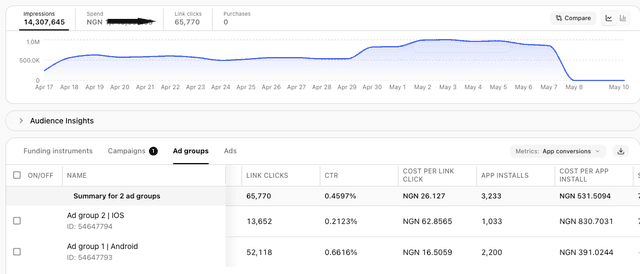
Ran a 3-week app install campaign on X recently, and the results were interesting.
The goal was simple:
Drive quality app installs at scale while keeping acquisition cost efficient across both Android & iOS users.
Setup:
Separate ad groups for Android & iOS
Optimized for app conversions
Focused on relatable, financially-aware creatives instead of generic “download our app” messaging
Used direct copy tied to real-life money habits, salary planning, student finance, and everyday financial behavior
These were two of the strongest-performing creatives from the campaign:
“Before Salary Lands, Prepare Where It Will Land.”
“Don’t Wait Till You Graduate to Get Serious About Money.”
One thing I noticed quickly:
The creatives that performed best were not necessarily the most polished.
They were the ones that felt familiar, realistic, and emotionally connected to how people already think about money.
Android and iOS users also behaved very differently.
Android:
52,118 link clicks
2,226 installs
Higher CTR
Lower CPI
iOS:
Lower click volume
Lower install volume
Higher acquisition cost
Another interesting pattern was how much optimization improved performance over time.
At the beginning of the campaign:
iOS CPI was 1,695
Android CPI was 1,180
Before the campaign ended:
iOS CPI dropped to 802
Android CPI dropped to 386
That reduction showed the algorithm gradually finding better-quality users and improving delivery efficiency as the campaign matured.
Overall campaign performance:
14.3M+ impressions
65,770 clicks
3,295 app installs
2,124 app opens
The app opens were another strong signal for me because it showed that a significant number of users who installed the app actually engaged with it after download, not just install and abandon immediately.
Biggest insight from this campaign:
A lot of app campaigns fail because they optimize for traffic instead of install intent.
Cheap clicks can make a dashboard look good, but if the setup, targeting, and messaging aren’t aligned to conversion behavior, installs will suffer.
Also, Android users continue to convert more efficiently at scale in this market, while iOS users remain more expensive to acquire but potentially have higher value long term.
Still testing. Still learning.
But overall, this was a strong reminder that platform-native messaging and audience psychology matter just as much as media budget.
Admin Strategist
Thinq Media Strategy